
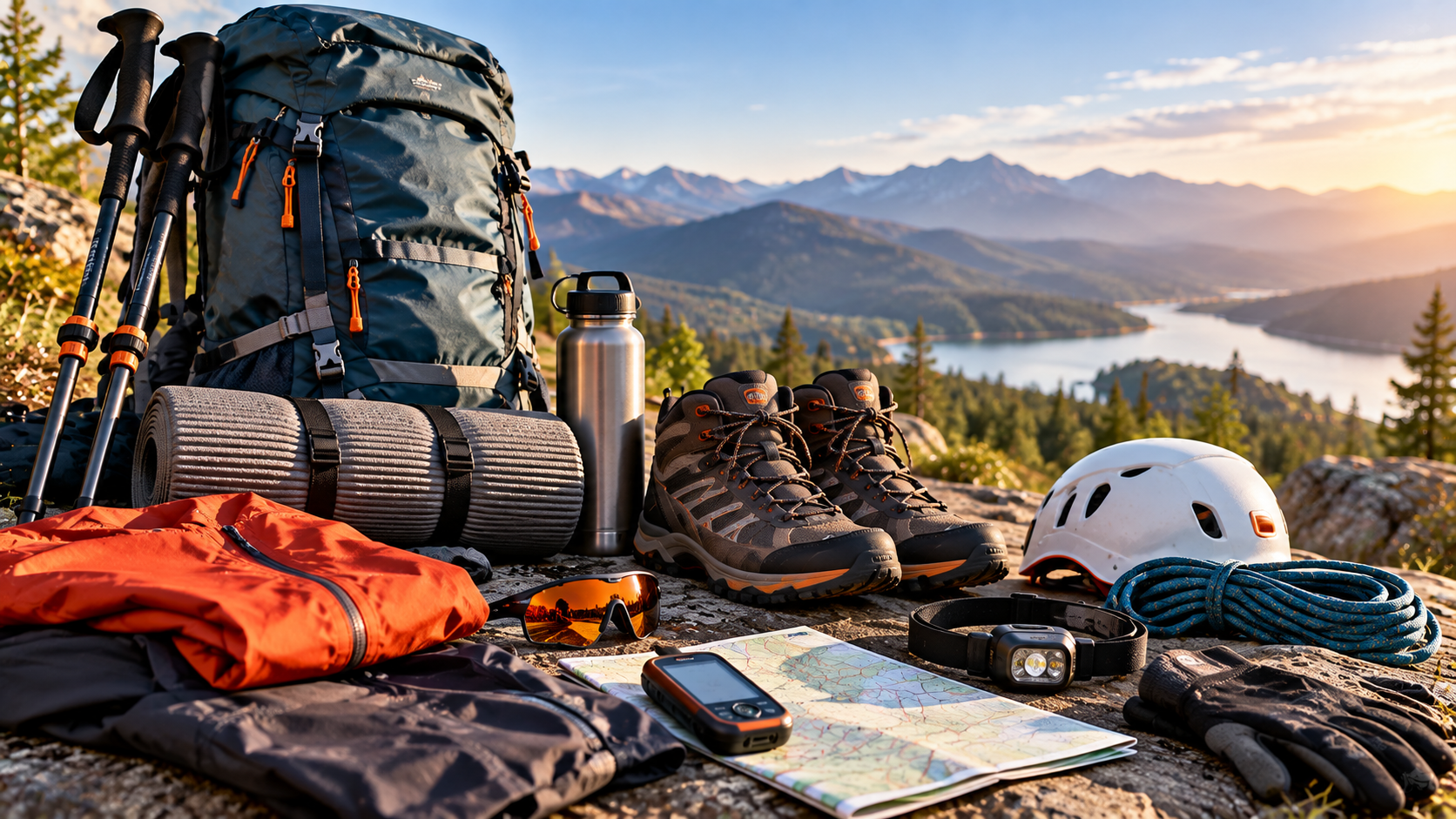
How to choose gear for outdoor sports
Choosing the right gear for outdoor sports starts with understanding the activity itself. Equipment that works well for a relaxed walk may be unsuitable for running, cycling, hiking or more demanding outdoor training. The right choice should provide comfort, freedom of movement and appropriate protection without creating unnecessary weight or inconvenience.
Rather than choosing equipment simply because it looks attractive or contains many features, it is better to consider how and where it will actually be used. The duration of the activity, terrain, weather, intensity and personal experience all influence what is needed.
Start with the type of activity
Different outdoor sports place different demands on equipment. Running requires lightweight clothing and footwear that allow natural movement. Hiking may require stronger shoes, a comfortable backpack and additional protection from changing weather. Cycling involves specific clothing and equipment designed for riding, while outdoor fitness can require a combination of comfortable sportswear and activity-specific accessories.
Before buying anything, make a list of the activities you expect to practise most often. This prevents spending money on equipment that may rarely be used.
It is also useful to distinguish between occasional and regular activities. Someone who goes hiking several times a year may have different requirements from a person who spends every weekend on mountain trails.
Choose suitable footwear
Footwear is one of the most important parts of outdoor sports equipment. The correct pair should correspond to the surface, activity and expected conditions.
For running, lightweight sports shoes designed for running are generally more appropriate than ordinary trainers. For hiking, the choice depends on the terrain and distance. Easy trails may require relatively light footwear, while rocky or uneven routes can call for models offering greater support and protection.
Fit is just as important as the technical characteristics of the shoe. There should be enough space for comfortable movement of the toes, while the heel should remain stable. Trying footwear with the socks normally used for the activity can make the fitting process more accurate.
Consider the weather
Outdoor activities are directly affected by weather, so equipment should be selected with environmental conditions in mind. Clothing suitable for a warm and dry day may become uncomfortable when temperatures fall or rain begins.
Layering is often a practical solution. Several lighter layers make it possible to adjust clothing during activity. A base layer can help manage moisture, an additional layer can provide warmth, and an outer layer can offer protection from wind or rain.
Weather protection does not necessarily mean carrying heavy equipment. Lightweight jackets and compact accessories can provide useful protection while taking up relatively little space.
Pay attention to materials
The material of sports clothing affects comfort during movement. Outdoor activities can cause the body to heat up quickly, so clothing that manages moisture and dries relatively quickly may be preferable to materials that remain wet for a long time.
The choice also depends on the season. In colder weather, several layers can provide flexibility, while warm-weather clothing should allow sufficient ventilation and comfortable movement.
Durability should also be considered. Equipment intended for regular outdoor use may experience more friction, dirt and exposure to weather than clothing used only indoors. A slightly more durable product can therefore be more practical over time if it is used frequently.
Choose a practical backpack
A backpack should match the length and nature of the activity. For a short training session, a large hiking backpack may be unnecessary. For a full-day excursion, however, additional space may be required for water, food, spare clothing and other essentials.
Comfort is particularly important. Adjustable straps and an appropriate size can help distribute the load more effectively. A backpack that feels comfortable when empty may feel completely different when filled, so it is useful to consider how much equipment will normally be carried.
Additional compartments can make organisation easier, but a large number of pockets is not automatically an advantage. The most useful design is one that allows essential items to be accessed without unnecessary searching.
Think about safety
Outdoor sports can involve changing terrain, weather and visibility. Depending on the activity, safety equipment may therefore be just as important as performance-oriented gear.
A charged phone can be useful for communication and navigation. For longer or more remote activities, additional navigation equipment may be appropriate. A small first-aid kit can also be useful for dealing with minor injuries or discomfort.
For activities involving specific risks, specialised protective equipment should be selected according to the requirements of that activity. The priority should always be appropriate protection rather than appearance.
Do not buy everything at once
Beginners often make the mistake of purchasing a complete collection of equipment before understanding what they actually need. This can lead to unnecessary expenses and equipment that remains unused.
A better approach is to start with the essentials. Choose appropriate footwear, comfortable clothing and the basic equipment required for the activity. After gaining experience, it becomes easier to identify which additional items would genuinely improve comfort or performance.
Personal experience is valuable because two people practising the same sport may have very different preferences. What feels comfortable for one person may not work equally well for another.
Compare quality, comfort and price
The most expensive product is not automatically the best choice. At the same time, the cheapest option may not provide the durability or comfort required for regular outdoor use.
When comparing equipment, consider several factors together: construction quality, materials, fit, intended use, durability and ease of maintenance. Reviews and product specifications can provide useful information, but personal fit and practical suitability should remain important considerations.
It can also be useful to distinguish between features that are genuinely useful and those that simply make a product appear more advanced. Equipment with fewer but relevant features may be more practical than a complicated product that is difficult to use.
Consider the conditions in which you will train
The same activity can require different equipment depending on where it takes place. Running on paved urban paths is different from running on forest trails. Hiking in mild conditions is different from hiking in exposed mountainous areas.
Think about the terrain, typical weather, distance and accessibility of the location. If the equipment is selected for the conditions in which it will actually be used, it is more likely to provide the expected comfort and protection.
It is also worth considering transport and storage. Equipment that is difficult to carry, clean or store may become inconvenient even if it performs well during the activity itself.
Build your equipment gradually
Good outdoor equipment does not have to be purchased in one large investment. A gradual approach makes it possible to learn from experience and improve the setup over time.
Start with the items that directly affect comfort and safety. Once those are covered, consider additional accessories based on real needs. After several activities, it becomes much easier to understand what is genuinely useful and what can be left at home.
Ultimately, choosing gear for outdoor sports is about finding a balance between functionality, comfort, durability and practicality. The best equipment is not necessarily the most expensive or technically advanced. It is the equipment that suits the activity, fits the person using it and performs reliably in the conditions where it will be needed.
No responses yet