
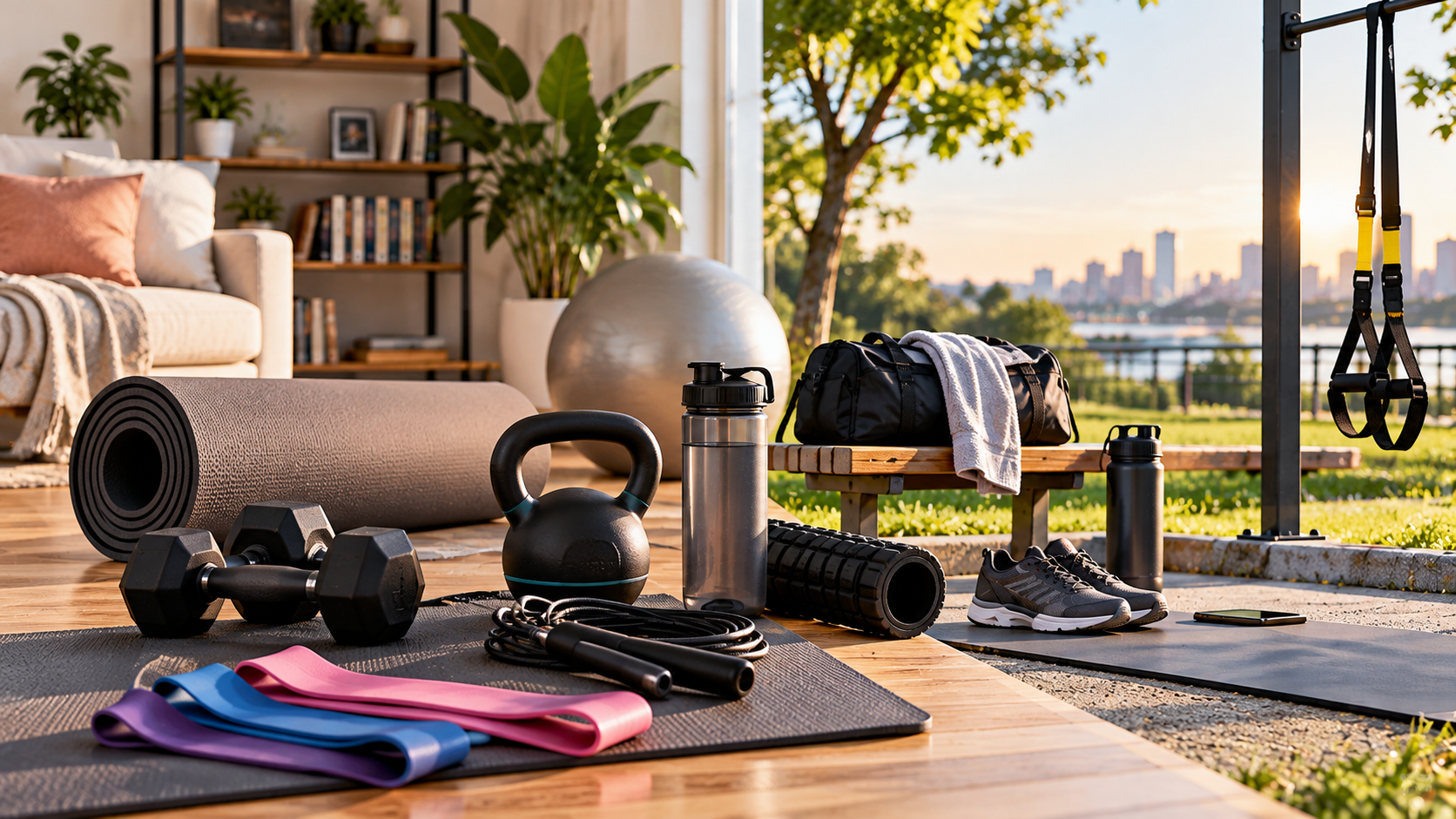
A comfortable workout does not necessarily require a dedicated gym, expensive equipment or a large amount of space. With a little preparation, an effective exercise routine can be organised at home, in a garden, in a park or in another suitable outdoor location. The most important factors are enough room to move safely, appropriate clothing and equipment, and an environment that makes it easier to concentrate on the activity.
The ideal setup depends on the type of workout, the available space and the weather. A home workout provides greater control over the surroundings, while exercising outdoors offers more freedom and variety. In both cases, a few simple principles can make training more convenient.
Choose a suitable place
The first step is to find a location where movement is not restricted. At home, even a relatively small area can be sufficient if furniture and other objects are moved out of the way. The floor should provide a stable surface, particularly for exercises involving standing, jumping or changes of position.
Outdoor workouts require a little more attention to the surroundings. A level and clean surface is preferable because uneven ground can make some movements uncomfortable or unstable. Parks, gardens and open recreational areas can provide enough space, but the selected location should allow the exercises to be performed without interfering with other people.
Privacy can also influence comfort. Some people find it easier to concentrate in a quiet room, while others enjoy the atmosphere of an outdoor space. Choosing a location where the environment feels comfortable can make it easier to maintain a regular routine.
Prepare appropriate clothing
Workout clothing should allow unrestricted movement and correspond to the temperature. Clothes that are too tight can make certain exercises uncomfortable, while excessively loose garments may interfere with movement.
For indoor training, lightweight sportswear is often sufficient. Outdoor workouts require greater attention to weather conditions. Layers can be useful when temperatures are low or change during the day, while breathable clothing can make warm-weather training more comfortable.
Footwear should also correspond to the activity and surface. Shoes should fit securely and provide a stable base for the movements being performed. Outdoor training may require footwear with a sole suitable for grass, paths or other surfaces.
Use a suitable exercise surface
A comfortable surface can make a significant difference, especially during floor-based exercises. A fitness mat can provide additional cushioning and create a clearly defined workout area at home or outdoors.
The surface should be stable and free from objects that could interfere with movement. When exercising outside, check the ground before starting. Wet, slippery or heavily uneven surfaces may not be suitable for certain movements.
A mat is also useful because it can make the transition between different exercises more convenient. After the workout, it can be rolled up and stored without requiring much space.
Keep equipment simple
Many workouts can be completed using body weight alone. This can be particularly convenient when exercising outdoors or in a small room. If additional equipment is useful, start with items that can support several different exercises.
Resistance bands, a skipping rope or a pair of suitable weights can expand the range of possible movements without requiring a large storage area. The choice should be based on actual training needs rather than the desire to collect equipment.
Outdoor workouts can also make use of the surroundings, provided that the selected objects are stable and appropriate for exercise. Benches, steps or open spaces may offer additional possibilities, but safety should always come first.
Organise the workout area
A well-organised space makes preparation faster and reduces distractions. At home, keep frequently used equipment in one accessible place. Before beginning, remove unnecessary objects from the exercise area.
For outdoor training, bring only what is needed. A small backpack or bag can hold water, a towel, a phone and compact exercise accessories.
Having everything ready before starting also helps maintain continuity. Constantly searching for equipment or moving objects during a workout can interrupt concentration.
Pay attention to temperature and weather
Outdoor workouts are strongly influenced by weather. Before leaving, consider the temperature, wind, rain and amount of sunlight. Clothing and equipment can then be adjusted accordingly.
On hot days, access to water and a suitable location with some shade can improve comfort. During colder periods, warming up properly and wearing appropriate layers can make the start of a workout easier.
If weather conditions become unsuitable, there is no need to force an outdoor session. Having a simple indoor alternative makes it easier to maintain consistency without depending entirely on the weather.
Plan the beginning and end of the workout
A comfortable workout should not begin abruptly. A few minutes of gentle movement can help prepare the body for the planned activity. The exact preparation can vary depending on the type and intensity of training.
The end of the session should also allow time to reduce activity gradually. Gentle movements and a short recovery period can make the transition back to normal daily activities more comfortable.
Planning these parts of the workout prevents the entire session from becoming focused only on the main exercises.
Make water easily accessible
Having water nearby is a simple way to make a workout more convenient. At home, the bottle can remain within easy reach. Outdoors, it should be packed in a way that allows access without interrupting the session for a long time.
The amount needed depends on the duration, intensity and environmental conditions. Longer or more demanding outdoor sessions require more careful preparation, particularly in warm weather.
A reusable bottle is a practical option because it can be used for both indoor and outdoor activities.
Reduce distractions
Comfort is not only about physical conditions. The surrounding environment can influence concentration and motivation. At home, notifications, household tasks and other interruptions can make it difficult to maintain focus.
Creating a specific workout area can help establish a clear separation between exercise and other activities. Preparing music, a training plan or a timer in advance can also reduce the need to interact with a phone during the session.
Outdoors, choosing a quieter location can provide a more focused environment. At the same time, the surroundings can make training feel less repetitive and provide a change from an indoor routine.
Create a setup you can maintain
The best workout environment is one that can be prepared easily and used regularly. A complicated setup may seem attractive initially but can become inconvenient over time.
Keep frequently used equipment accessible, choose clothing that works for the conditions and decide in advance where workouts will normally take place. Having an alternative location is also useful when circumstances change.
A comfortable setup should support consistency rather than create additional work. Whether the workout takes place in a living room, garden or park, the same basic principles apply: enough space, suitable clothing, a stable surface, accessible water and equipment that matches the activity.
With these elements in place, it becomes much easier to turn almost any suitable space into a practical workout environment and maintain an active routine throughout the year.
No responses yet