
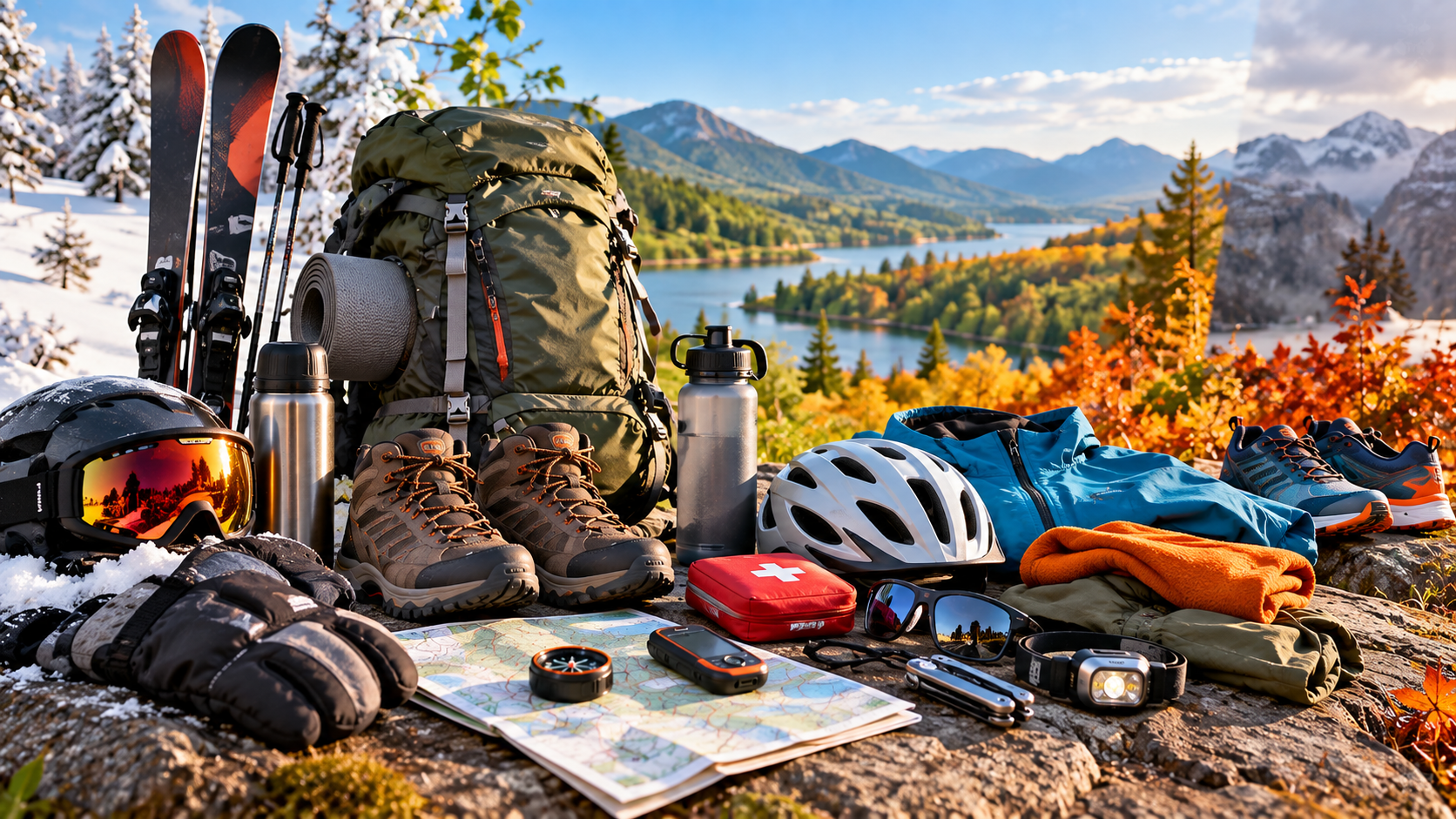
Active leisure can take many forms, from walking and cycling to hiking, outdoor workouts and weekend excursions. Each season creates its own conditions, but a well-prepared set of practical items can make outdoor activities more comfortable throughout the year. The key is not to carry everything possible, but to choose equipment according to the weather, duration of the activity and type of movement.
A few versatile items can be useful in almost any season. Others are better selected according to temperature and environmental conditions. Understanding this difference makes it easier to prepare without carrying an unnecessarily heavy bag.
Comfortable clothing for changing conditions
Clothing is one of the most important elements of active leisure. It should allow freedom of movement and correspond to the temperature and expected weather. For activities that last several hours, clothing should also be easy to adjust as conditions change.
Layering is particularly practical. Several lighter garments make it possible to remove a layer when the body becomes warm or add one when the temperature drops. This approach can be useful during spring and autumn, but it also works in winter and on cool summer mornings or evenings.
A lightweight outer layer can provide protection against wind or rain. It is worth choosing an item that can be folded compactly and carried in a backpack when it is not needed.
Suitable footwear
Good footwear is useful regardless of the season, although the requirements change according to the activity and surface. Comfortable shoes can make a considerable difference during long walks, hiking trips, outdoor training and other activities that involve extended movement.
The sole should correspond to the terrain. Smooth urban surfaces have different requirements from forest paths, gravel trails or uneven ground. In colder or wet conditions, additional attention should be paid to protection from moisture and maintaining a stable step.
It is also important not to choose footwear based only on appearance. A comfortable fit, sufficient room for the toes and stable support are often more important for practical outdoor use.
A reusable water bottle
Water is one of the simplest things to include in an outdoor kit. Even a moderate activity can become less comfortable when it is combined with warm weather, physical exertion or a long distance.
A reusable bottle can be used throughout the year and eliminates the need to carry disposable containers. The appropriate capacity depends on the duration and intensity of the activity as well as access to places where the bottle can be refilled.
For shorter walks, a compact bottle may be sufficient. Longer excursions require more careful planning so that enough water is available for the entire route.
A practical backpack
A small backpack can be useful for almost any form of active leisure. It provides space for water, additional clothing, personal items and other necessities while leaving both hands free.
The size should correspond to the planned activity. A compact model is often enough for a short walk or workout, while longer excursions may require more space.
Comfortable shoulder straps and good weight distribution are important. An oversized backpack can encourage unnecessary packing and make movement less convenient, so it is better to select a size that matches typical needs.
Protection from the sun
Sunny weather can occur at any time of year, particularly during outdoor activities in open areas. Sunglasses, a suitable hat and clothing that provides reasonable coverage can make time outdoors more comfortable.
Sun protection is especially relevant during long walks, cycling trips, hiking and sports activities where there is little shade. It is also useful to remember that bright conditions are not limited to the hottest months.
The specific items required depend on the season, location and duration of the activity, but basic protection can easily become part of a regular outdoor kit.
Weather protection
A compact rain jacket or wind-resistant outer layer can be useful even when the weather appears stable. Conditions can change quickly during a longer excursion, and having an additional protective layer can prevent a minor weather change from becoming a major inconvenience.
In colder months, protection from wind can be particularly valuable. During warmer seasons, a lightweight waterproof layer can often be carried without taking up much space.
The most practical option is usually something that can be packed away easily when conditions are dry.
Small first-aid supplies
A compact first-aid kit can be useful during active leisure, particularly when travelling away from home or spending several hours outdoors. It does not need to contain a large number of items.
Basic supplies for minor cuts, scratches or blisters can be enough for ordinary activities. The contents should correspond to the type of excursion and the environment rather than being unnecessarily extensive.
Keeping such items in one small, easily accessible section of the backpack makes them easier to find when required.
Phone and power bank
A phone can serve several practical purposes during outdoor activities. It can be used for communication, navigation, weather information, photographs and, where appropriate, recording a route or workout.
Battery capacity can become more important during longer excursions. A compact power bank can provide additional flexibility when access to electricity is unavailable for several hours.
It is sensible to protect electronic devices from rain, snow and accidental impacts, especially when the activity takes place outdoors for an extended period.
Food and convenient snacks
Food becomes more relevant as the duration of an activity increases. For a short walk, it may not be necessary to carry anything, while a full-day excursion requires more planning.
Compact snacks that are easy to transport can be practical during longer activities. The main considerations are convenience, storage conditions and whether the food can be consumed without complicated preparation.
The amount should correspond to the planned route. Carrying excessive food adds unnecessary weight, while taking too little may create discomfort during a long outing.
Seasonal additions
Although many items can be used throughout the year, each season requires some additional preparation.
In spring, waterproof clothing and footwear can be particularly useful because of rain and wet ground. Summer activities may require greater attention to water, sun protection and breathable clothing. Autumn often calls for layers, wind protection and reliable footwear for wet surfaces. Winter requires appropriate insulation, protection from cold conditions and footwear suitable for potentially slippery terrain.
This does not mean creating four completely different equipment sets. Many basic items can remain the same while a few seasonal pieces are added or replaced.
How to keep an outdoor kit practical
The most useful approach is to create a basic set that covers everyday needs and then adjust it before each activity. Check the weather, estimate the duration, consider the terrain and remove anything that is unlikely to be needed.
For a short walk, a phone, water and suitable clothing may be enough. A workout may require sportswear, appropriate footwear and a towel. A longer excursion can additionally require food, weather protection, navigation equipment, a first-aid kit and spare clothing.
Active leisure becomes easier when preparation is simple and consistent. Instead of buying large amounts of specialised equipment, it is often better to build a compact collection of reliable items that can be used in different situations.
The best year-round outdoor kit is therefore flexible. It should provide comfort and practical support without becoming a burden. By combining versatile essentials with a few seasonal additions, it is possible to stay prepared for walks, workouts and excursions in almost any weather.
No responses yet