
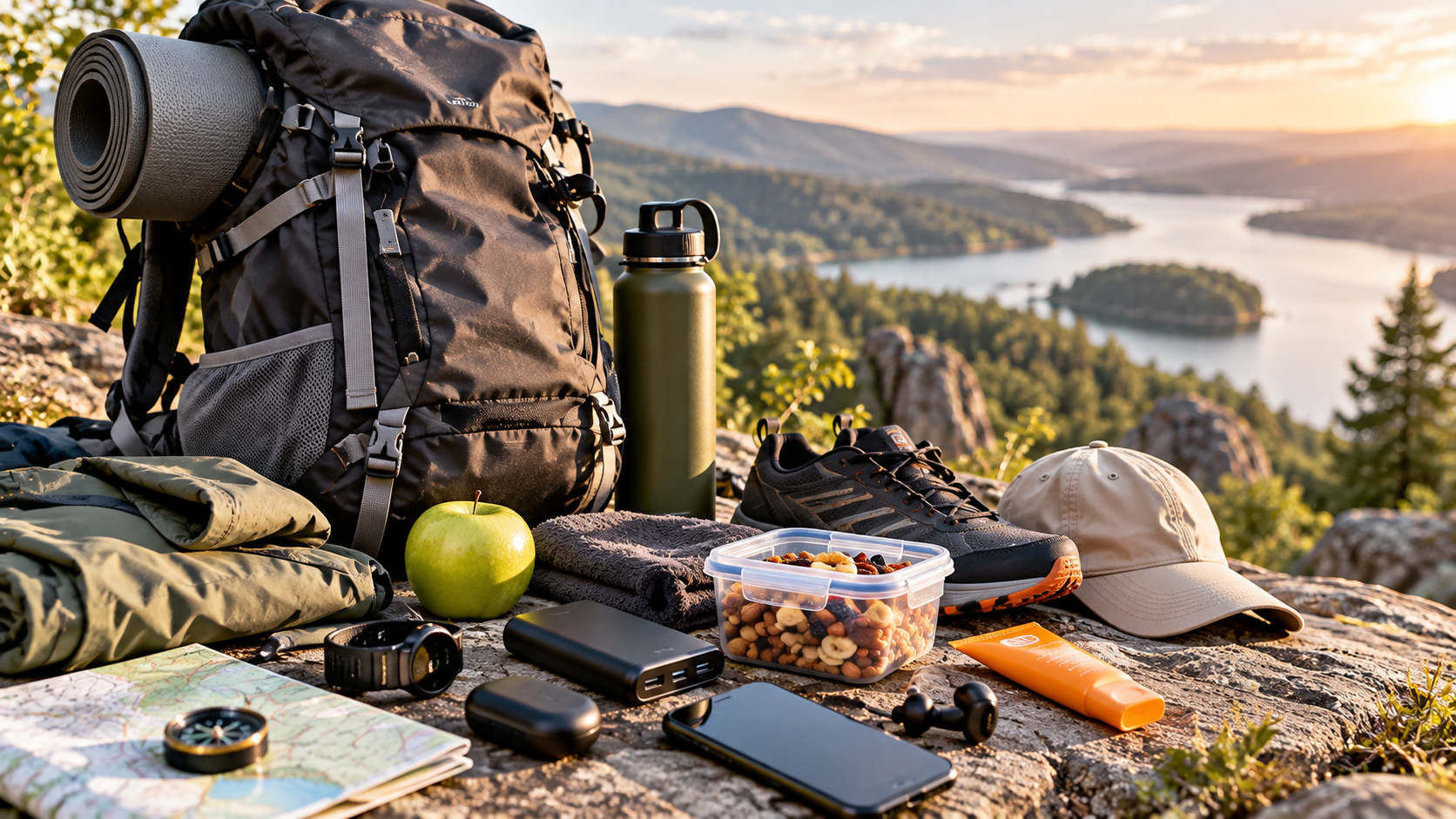
A good preparation starts with understanding what kind of activity is planned, how long it will last, and what conditions can be expected along the way. A short walk around the neighbourhood requires a very different set of things than a several-hour outdoor excursion. At the same time, there are a few practical items that can make almost any activity more comfortable and help avoid unnecessary problems.
The goal is not to fill a backpack with everything that might possibly be useful. A better approach is to take only what corresponds to the duration, intensity and environment of the planned activity. This keeps the load manageable while ensuring that the most important necessities are available when they are needed.
What to take for a regular walk
For a short walk, the list can remain very simple. Comfortable clothing and suitable shoes are usually the most important things. If the weather is changeable, a light jacket or an additional layer can be useful, especially when the walk takes place in the morning or evening.
It is also sensible to have a bottle of water. Even during a relaxed walk, especially in warm weather, regular drinking can make the activity more pleasant. A small bag can hold personal essentials such as keys, a phone, identification and a small amount of money or a payment card.
When walking for a longer period, a few additional items may be worthwhile. Sunglasses can be useful in bright weather, while a compact rain jacket can provide protection when the forecast is uncertain. If the route passes through parks, forests or other less urban areas, insect protection may also be appropriate.
What to take to a workout
The contents of a sports bag depend strongly on the type of training. Nevertheless, several basic items are useful for many different workouts. Comfortable sportswear should allow free movement and correspond to the temperature and type of exercise. Appropriate footwear is equally important because different activities place different demands on the feet.
Water should generally be part of the basic equipment. A towel can also be useful, particularly when training takes place in a gym or another shared indoor environment. Depending on the activity, it may also be helpful to take a change of clothes so that damp sportswear does not have to be worn after exercising.
For outdoor training, weather conditions should be considered before leaving. In sunny weather, protection from direct sunlight can be important. During colder periods, several light layers can be more practical than one heavy item because they make it easier to adjust clothing during the workout.
Personal items should be kept to a minimum. A phone may be useful for communication, navigation or tracking a workout, but unnecessary objects only add weight and can become a distraction.
What to take on an outdoor excursion
A longer excursion requires more preparation than an ordinary walk or workout. The first step is to consider the planned route, its duration and the surroundings. A short trip along a well-maintained path has different requirements from a full-day excursion through an unfamiliar area.
Water becomes especially important when spending several hours outdoors. The amount required depends on weather, activity level and access to places where additional water can be obtained. Food should also be planned in advance. Simple, easy-to-carry snacks can provide convenient energy without taking up too much space.
Navigation is another important consideration. A phone with a charged battery can be useful, but relying exclusively on electronic navigation may not always be practical. For longer or more remote routes, having an additional navigation method can provide extra security.
A small first-aid kit is another sensible addition to an excursion backpack. It does not need to be large. Basic supplies for treating minor cuts, blisters or similar inconveniences may be sufficient for an ordinary day outdoors.
Clothing and protection from the weather
Weather can change during an outdoor activity, so clothing should be selected with some flexibility. Instead of choosing clothes based only on the temperature at the moment of departure, it is better to consider how conditions may develop during the entire activity.
Layers are particularly practical because they allow clothing to be adjusted as the body warms up or the temperature changes. A lightweight outer layer can provide protection from wind or rain without taking up much space in a backpack.
Headwear can also be useful. In warm weather, it can provide protection from direct sunlight, while in colder conditions an appropriate hat can help maintain comfort. The exact choice depends on the season and the environment.
Food and drinks
For short activities, carrying food may not be necessary. Once an outing becomes longer, however, having something to eat can be convenient. Foods that are easy to transport, do not require complicated preparation and can tolerate being carried in a bag are usually practical choices.
It is worth considering when food will be needed rather than simply taking a large quantity. A planned snack can prevent an unnecessary stop or discomfort during a longer excursion.
Drinks should be equally well planned. A reusable bottle is convenient for regular activities, while longer excursions may require additional capacity. In all cases, the expected duration and environmental conditions should determine how much is taken.
Small items that can make a difference
Some objects occupy very little space but can be surprisingly useful. A small pack of tissues, hand sanitiser, a compact flashlight and a power bank can be considered depending on the type of activity.
For walks or excursions in areas with uneven terrain, a small amount of basic personal care equipment can also be useful. Blister protection, for example, may be particularly valuable when footwear is new or when walking for several hours.
The important principle is to distinguish between useful preparation and unnecessary packing. Taking too many items can make the backpack heavier and make movement less comfortable. A short checklist based on the specific activity is usually more effective than carrying a large collection of emergency objects.
How to prepare before leaving
A few minutes of preparation can make an outdoor activity considerably easier. Check the expected weather, consider how long the activity will last and think about whether there will be access to water, food, shops or other facilities along the route.
It is also worth checking the condition of essential equipment. Shoes should be comfortable, the phone should have enough battery, and any items needed for navigation should be available. For longer excursions, it is useful to tell someone where you are going and approximately when you expect to return.
The contents of the bag should then be adjusted to the actual circumstances. There is no need to carry the same equipment for a twenty-minute walk as for a full-day excursion.
A practical approach to packing
A simple way to organise preparation is to divide everything into several groups: essential items, weather protection, food and drinks, and activity-specific equipment. This makes it easier to decide what can be left at home.
For a short walk, essentials may be limited to a phone, keys, water and appropriate clothing. For a workout, sportswear, suitable footwear, water and a towel may be enough. A longer outdoor excursion requires a more comprehensive approach, including food, navigation, weather protection and basic first-aid supplies.
The best equipment is therefore not necessarily the largest or most extensive collection of items. It is the equipment that matches the planned activity. By considering duration, weather, terrain and personal needs beforehand, it becomes possible to prepare a compact and practical bag that supports movement rather than getting in the way.
No responses yet